


The Hidden Costs of Electrical Downtime – And How the Right Control Panel Can Prevent It

For many industrial businesses, electrical downtime is seen as an unavoidable part of operations. A component fails, production stops, engineers investigate the problem, and eventually everything gets back up and running.
But the true cost of downtime extends far beyond the repair itself.
Every minute that machinery sits idle can impact productivity, delivery schedules, labour costs and customer satisfaction. Investing in a well-designed control panel isn't just about keeping equipment running, it's about protecting your business.
The Real Cost of Downtime
When production stops unexpectedly, the financial impact builds quickly.
There may be lost output, staff waiting for machinery to restart, wasted materials and missed delivery deadlines. If specialist engineers or replacement parts are needed at short notice, repair costs can increase significantly.
In many cases, the biggest expense isn't fixing the fault - it's the disruption to the entire operation.
Control Panels Play a Critical Role
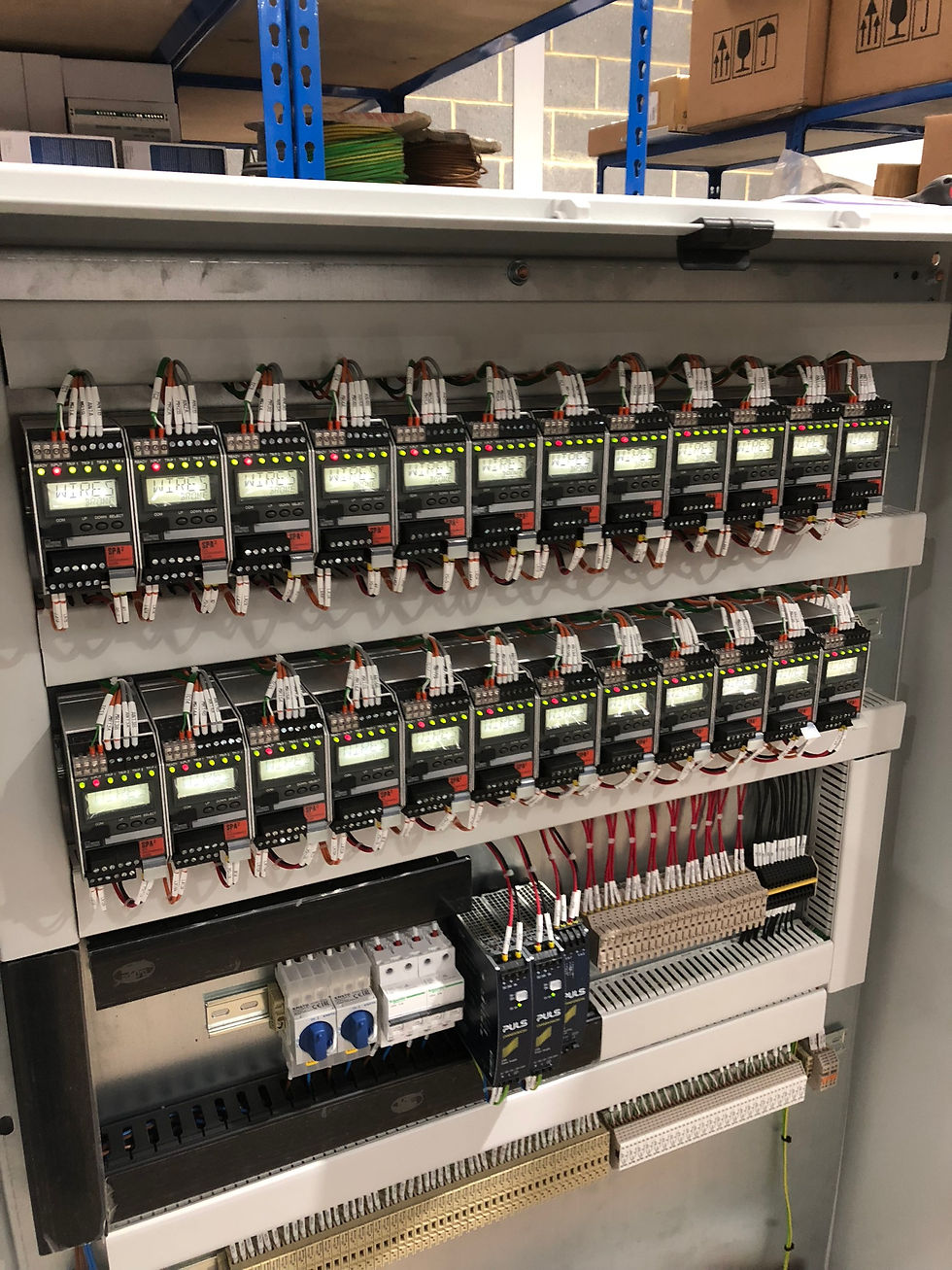
A control panel acts as the central hub of an automated system, monitoring inputs, controlling outputs and ensuring equipment operates safely and efficiently.
A poorly designed or ageing panel can become a single point of failure, increasing the likelihood of faults and making troubleshooting more difficult.
Modern control panels are designed with reliability, maintainability and future expansion in mind.
Better Diagnostics Mean Faster Recovery
One of the biggest advantages of modern PLC-based control systems is improved fault diagnosis.
Instead of spending hours tracing wiring or testing components manually, operators can quickly identify alarms, fault conditions or failed devices through an HMI or diagnostic interface.
The faster a fault is identified, the sooner production can resume.
Built for Your Process
Off-the-shelf solutions may appear cost-effective initially, but every manufacturing process has unique requirements.
A bespoke control panel designed specifically for your application can improve efficiency, simplify maintenance and allow for future upgrades as your business grows.
It also reduces the need for workarounds that can create reliability issues later.
Preventative Design Saves Money
Many businesses invest in maintenance programmes but overlook the importance of robust system design.
Features such as correctly sized components, clear labelling, organised wiring layouts and quality-tested assemblies all contribute to easier maintenance and reduced downtime throughout the life of the equipment.
Good design pays dividends long after installation.
Future-Proofing Your Operations
As automation technology evolves, businesses increasingly want remote monitoring, energy reporting and integration with wider production systems.
Choosing a modern control panel designed with expansion in mind makes it easier to adopt new technologies without replacing the entire system.
It's an investment in long-term operational resilience.
Final Thoughts
Electrical downtime will never disappear entirely, but its impact can be significantly reduced through intelligent engineering and reliable control systems.
Whether you're upgrading existing equipment or planning a new installation, investing in a high-quality bespoke control panel helps minimise disruption, improve efficiency and keep your business moving.
At PSL Controls, we work closely with customers to design and manufacture control panels that deliver reliability, flexibility and long-term value. The right control solution isn't just an electrical component - it's a key part of your business continuity strategy.


I appreciated the depth with which this topic is treated. The explanations are direct and get straight to the point. I made note of several points that will be useful to me later. It is a text that stands out for the quality and clarity of the information.