


What's Inside an Industrial Control Panel? A Guide to the Key Components

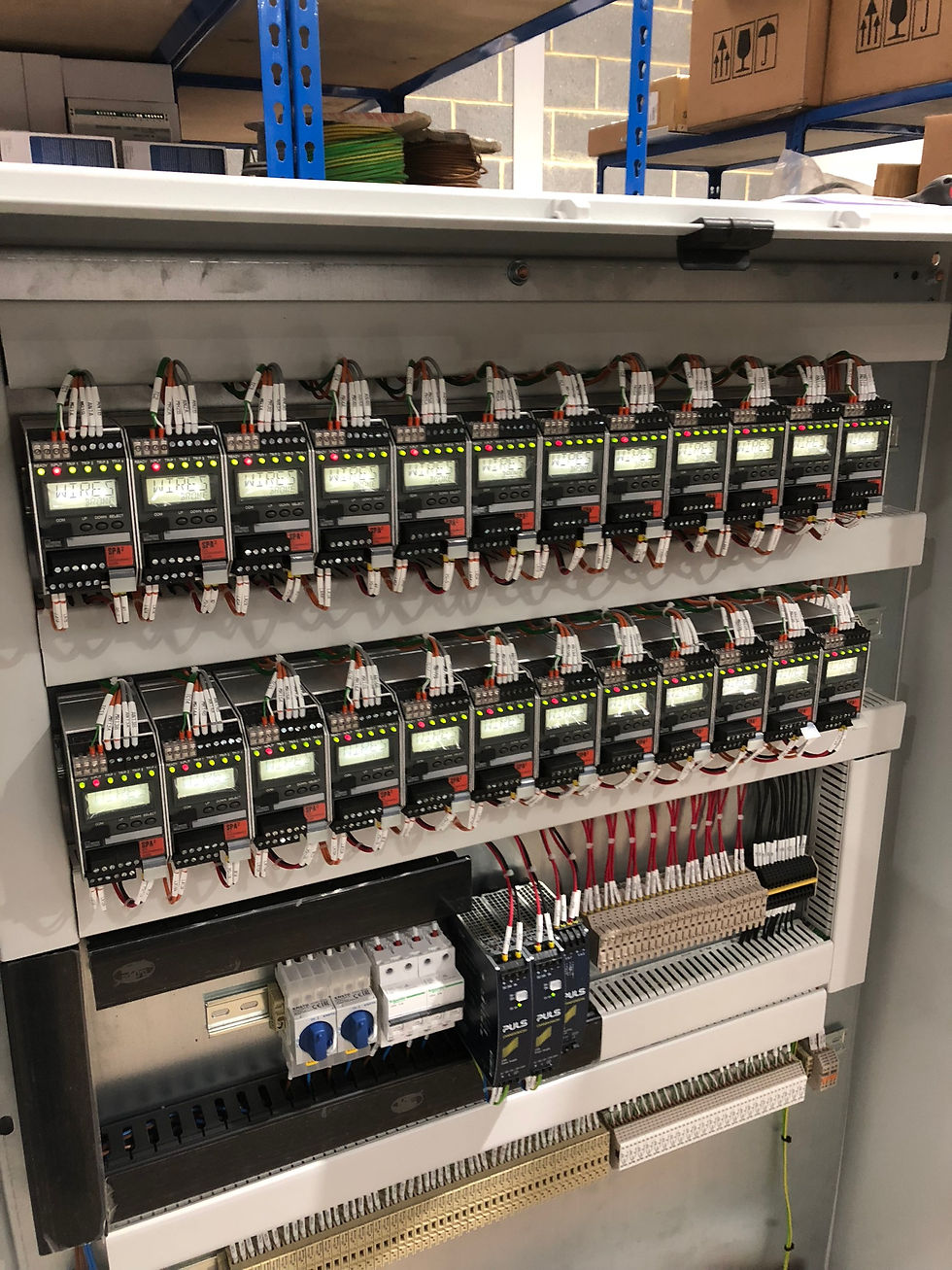
Industrial control panels are at the heart of countless processes, from manufacturing and water treatment to pumping stations and material handling. While they may look like a collection of wires and electrical components, every part inside a control panel has a specific purpose.
Understanding the role of these components can help businesses appreciate how control systems improve efficiency, reliability and safety across a wide range of industrial applications.
Here's a closer look at what's inside a typical industrial control panel.
The PLC – The Brain of the System
The Programmable Logic Controller (PLC) is often described as the brain of the control panel.
It receives information from sensors, switches and other field devices before processing that data and making decisions based on the programmed logic.
For example, a PLC may start a pump when a storage tank reaches a certain level, stop a motor if a fault is detected or control the sequence of an automated production process.
Because PLCs are highly flexible, they can be programmed to suit almost any industrial application.

Human Machine Interface (HMI)
The Human Machine Interface, or HMI, is how operators interact with the system.
Modern HMIs provide a clear visual display of the process, allowing users to:
Start and stop equipment
Monitor operating conditions
View alarms and fault messages
Adjust operating parameters
Access diagnostic information
A well-designed HMI gives operators greater visibility and makes day-to-day operation much simpler.

Contactors and Relays
Contactors and relays are responsible for switching electrical loads on and off.
Whether controlling pumps, motors, heaters or lighting, these components receive signals from the PLC and safely switch equipment into operation.
Although they perform a simple function, they are a vital part of many industrial control systems.

Circuit Protection
Protecting electrical equipment is just as important as controlling it.
Control panels typically include devices such as circuit breakers, fuses and overload protection to safeguard both the equipment and the wider electrical installation.
These components help prevent damage caused by short circuits, overloads or electrical faults, improving both safety and system reliability.

Variable Speed Drives (Where Required)
Many industrial applications use Variable Speed Drives (VSDs) to control the speed of electric motors.
Rather than simply turning motors on and off, VSDs allow operators to adjust motor speed to match the process requirements.
This can improve energy efficiency, reduce mechanical wear and provide greater process control.
Not every control panel requires a VSD, but where they're used, they can deliver significant operational benefits.
Terminal Blocks
Terminal blocks provide organised connection points between the control panel and field equipment.
While they may appear to be one of the simplest components inside the enclosure, they play an important role during installation, testing and future maintenance.
Clearly labelled terminals make wiring easier to follow and reduce the time needed for fault finding.

The Importance of Good Panel Layout
A high-quality control panel isn't simply about selecting the right components - it's also about how those components are arranged.
Good panel layout improves airflow, makes maintenance easier and allows engineers to identify components quickly when servicing or troubleshooting the system.
Combined with clear cable management and accurate labelling, a well-organised panel can significantly reduce downtime throughout its operational life.
Every Control Panel Is Different
No two industrial applications are exactly the same.
The components used in a pumping station will differ from those found in a manufacturing line or a water treatment facility. That's why bespoke control panels are designed around the specific needs of the process they control.
By selecting the right components and designing the panel to suit the application, engineers can create systems that are reliable, efficient and ready to support future expansion.
Built Around Your Process
At PSL Controls, every control panel is designed with the end application in mind.
From the initial design and component selection through to wiring, testing and commissioning, our focus is on delivering bespoke solutions that meet each customer's exact requirements.
Whether it's a simple control panel or a complex automation system, every component has a purpose - and every panel is built to deliver reliable performance for years to come.


Comments